Monday, February 17, 2020

Powerful Tools for Teaching and Learning: Web 2.0 Tools


What are Web 2.0 Tools?

These tools are internet tools that allow the user to go beyond just receiving information through the web. The user is expected to interact and to create content with others. Social media sites such as Facebook and Twitter are examples of Web 2.0 tools. Web tools can be used to enhance teaching and collaboration among teachers and students as well as increase professional collaboration between educators.


 Free Mobile Apps to Help You Learn English

  • Hello English. This is my first recommendation for anyone looking to improve their English. ...
  • Duolingo. If you want to learn English from scratch, then this is the app you are looking for. ...
  • Lingbe. Both Duolingo and Hello English can help you learn English and improve it. ...
  • Memrise. ...
  • busuu. ...
  • Awabe. ...
  • Learn English Daily. ...
  • Beelinguapp.

Learn English Daily

This app follows a simple approach to learning English by listening and speaking. The app consists of thousands of words and phrases narrated by native speakers.

You can listen to those phrases to improve your pronunciation and memorize them. It also notifies you to speak sentences every day to keep your English fluent.


                    Learn English Daily

Beelinguapp

Beelinguapp uses audiobooks to help you learn different languages. You just have to listen to stories and novels in the language you want to learn and side by side read the text in your native language.

Audiobooks lovers will surely love this app as they can listen to audiobooks of their interest and at the same time learn a new language. There are many free audio books to hone your English skills, but some are paid.
                                   
                         Beelinguapp


English Speaking Practice

It’s a practicing tool to help you improve your pronunciation and create confidence to have a conversation in English. The app has hundreds of recorded conversations where you can listen to native speakers and then speak and record yourself.

You can listen to yourself and a native speaker to compare and improve your pronunciation.
        
                           English Speaking Practice


Awabe

A completely free app that helps you learn over 4000 common phrases and vocabularies. The app works completely offline and there is tons of data to improve your English. The app offers translations, audio and video lessons, and a bunch of language learning games. You’ll also get daily speaking, listening, and memorizing tests that ensure your skills stay fluent.

                                 Awabe

Wednesday, February 12, 2020

How Literature shaped me ?


                       Image result for literature


What is literature ?


This is very basic question for the students of literature. While studying literature, teachers' and students are mostly concerned on the language rather then understanding, because literature is most generally made by language. In English literature, students are actually not aware with the concept of literature, but they are more interested in learning English language.

Most of the students have a basic understanding of literature that "It is the mirror of society". Mirror never reflects the real image of a person or a thing. It is a mere inverted image. However, literature reflects society in a bit different way. It can be considered as an x-ray image of society, which represents the the harsh reality and real image of society. Literature is of two kinds, first is the books and and paper one can buy from the shop and second is when a person experiences the lives hidden in the books. When a person feels the happiness and pain of different characters from the books, and its creates a different point of view of a person towards the literature.

Literature can be considered as a "Change" in us after its understanding. All can read literature but only few can feel and understand it. When we feel the conflict of Hamlet towards his life and when we understand the philosophical point of view of grave digging scene' we real understood it, that understanding changes our way of thinking. That change is not permanent but it leaves its effects in our mind. Literature contains various way of thinking in one piece of art! It has the villain like lago and the passionate hero like Othello. It contains a housewife like Mrs. Ramsay and a girl with freethinking like Lily Briscoe. It contains absurdity and nothingness like meaninglessness of Vladimir and Estragon's life and their condition. It contains Frankenstein's innocent monster and Edger Allan Poe's evilest and harmful humans. It gives us numerous ways of living life. It gives us each characters way of thinking and understanding of way they are behaving in a particular manner.

All these experiences can change us. We live thousand times in one life through literature. It attacks harshly and brutally kills our beautiful dreams( illusion) of life. Literature hurts our ego, and heals our hearts. It criticises us, and admires, but ultimately, it changes us.

No one can bind literature in any particular definition because it is made from language and as "Derrida said " Language bears within itself the necessity of its own critique". 

Literature is not easy to define in language but we can feel it, understand it, and express it through emotions. Catharsis is the way of getting literature. It changes us. By each reading, we can get the different essence of each subject. As it is said that by reading literature, one can read about people, he/she could never be, and adventures he/she would never have.


How Literature Shaped me....?


Yes, Literature shapes,  I have seen the changes in me. Like, one needs to be thinking man. 
Not only thinking but makes us ready  to be more onus. Theories of existentialism makes this life more interesting to live. It teaches the importance of choice. Most importantly , it gives a new way of life by creating the better human being.

Thursday, February 6, 2020

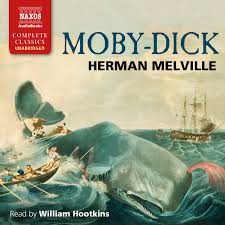
Moby Dick


                                                 Image result for moby dick novel original book cover


                                            Moby-Dick; or, The Whale is an 1851 novel by American writer Herman Melville. The book is sailor Ishmael's narrative of the obsessive quest of Ahab, captain of the whaling ship Pequod, for revenge on Moby Dick, the giant white sperm whale that on the ship's previous voyage bit off Ahab's leg at the knee. Wikipedia.


Herman Melville 


                                                              Image result for herman melville


                                              Herman Melville was an American novelist, short story writer and poet of the American Renaissance period. Among his best-known works are his magnum opus, Moby-Dick, and Typee, a romantic account of his experiences of Polynesian life. Melville was born in New York City, the third child of a merchant. Wikipedia.

  • Moby Dick Summary

                                            The novel Moby Dick by Herman Melville is an epic tale of the voyage of the whaling ship the Pequod and its captain, Ahab, who relentlessly pursues the great Sperm Whale (the title character) during a journey around the world. The narrator of the novel is Ishmael, a sailor on the Pequod who undertakes the journey out of his affection for the sea.

                                             Moby Dick begins with Ishmael's arrival in New Bedford as he travels toward Nantucket. He rests at the Spouter Inn in New Bedford, where he meets Queequeg, a harpooner from New Zealand who will also sail on the Pequod. Although Queequeg appears dangerous, he and Ishmael must share a bed together and the narrator quickly grows fond of the somewhat uncivilized harpooner. Queequeg is actually the son of a High Chief who left New Zealand because of his desire to learn among Christians. The next day, Ishmael attends a church service and listens to a sermon by Father Mapple, a renowned preacher who delivers a sermon considering Jonah and the whale that concludes that the tale is a lesson to preacher Truth in the face of Falsehood.

                                           On a schooner to Nantucket, Ishmael and Queequeg come across a local bumpkin who mocks Queequeg. However, when this bumpkin is swept overboard, Queequeg saves him. In Nantucket, Queequeg and Ishmael choose between three ships for a year journey, and decide upon the Pequod. The Captain of the Pequod, Peleg, is now retired, and merely owns the boat with another Quaker, Bildad. Peleg tells them of the new captain, Ahab, and immediately describes him as a grand and ungodly man. Before leaving for their voyage, Ishmael and Queequeg come across a stranger named Elijah who predicts disaster on their journey. Before leaving on the Pequod, Elijah again predicts disaster.


                                     Ishmael and Queequeg board the Pequod, where Captain Ahab is still unseen, secluded in his own cabin. Peleg and Bildad consult with Starbuck, the first mate. He is a Quaker and a Nantucket native who is quite practical. The second mate is Stubb, a Cape Cod native with a more jovial and carefree attitude. The third is Flask, a Martha's Vineyard native with a pugnacious attitude. Melville introduces the rest of the crew, including the Indian harpooner Tashtego, the African harpooner Daggoo.

                                  Several days into the voyage, Ahab finally appears as a man seemingly made of bronze who stands on an ivory leg fashioned from whalebone. He eventually gets into a violent argument with Stubb when the second mate makes a joke at Ahab's expense, and kicks him. This leads Stubb to dream of kicking Ahab's ivory leg off, but Flask claims that the kick from Ahab is a sign of honor.

                               At last, Ahab tells the crew of the Pequod to look for a white-headed whale with a wrinkled brow: Moby Dick, the legendary whale that took Ahab's leg. Starbuck tells Ahab that his obsession with Moby Dick is madness, but Ahab claims that all things are masks and there is some unknown reasoning behind that mask that man must strike through. For Ahab, Moby Dick is that mask. Ahab himself seems to recognize his own madness. Starbuck begins to worry that the ship is overmatched by the mad captain and knows that he will see an impious end to Ahab.

                            While Queequeg and Ishmael weave a sword-mat for lashing to their boat, the Pequod soon comes upon a whale and Ahab orders his crew to their boats. Ahab orders his special crew, which Ishmael compares to "phantoms," to their boats. The crew attacks a whale and Queequeg does strike it, but this is insufficient to kill it. Among the "phantoms" in the boat is Fedallah, a sinister Parsee.

                                 After passing the Cape of Good Hope, the Pequod comes across the Goney (Albatross), another ship on its voyage. Ahab asks whether they have seen Moby Dick as the ships pass one another, but Ahab cannot hear his answer. The mere passing of the ships is unorthodox behavior, for ships will generally have a 'gam,' a meeting between two ships. The Pequod does have a gam with the next ship it encounters, the Town-Ho.

                                      Ishmael interrupts his narration to tell a story that was told to him by the crew of the Town-Ho, just as he would tell it to a circle of Spanish friends after his journey on the Pequod. The story concerns the near mutiny on the Town-Ho and its eventual conflict with Moby Dick.


                                   The Pequod does vanquish the next whale that it comes across, as Stubb strikes a whale with his harpoon. However, as the crew of the Pequod attempts to bring the whale into the ship, sharks attack the carcass and Queequeg nearly loses his hand while fending them off.

                            The Pequod next comes upon the Jeroboam, a Nantucket ship afflicted with an epidemic. Stubb later tells a story about the Jeroboam and a mutiny that occurred on this ship because of a Shaker prophet, Gabriel, on board. The captain of the Jeroboam, Mayhew, warns Ahab about Moby Dick.

                                After vanquishing a Sperm Whale, Stubb next also kills a Right Whale. Although this is not on the ship's agenda, the Pequod pursues a Right Whale because of the good omens associated with having the head of a Sperm Whale and a head of a Right Whale on a ship. Stubb and Flask discuss rumors that Ahab has sold his soul to Fedallah.

                               The next ship that the Pequod meets is the Jungfrau (Virgin), a German ship in desperate need of oil. The Pequod competes with the Virgin for a large whale, and the Pequod is successful in defeating it. However, the whale carcass begins to sink as the Pequod attempts to secure it and thus the Pequod must abandon it. The Pequod next finds a large group of Sperm Whales and injures several of them, but only captures a single one.

                                Stubb concocts a plan to swindle the next ship that the Pequod meets, the French ship Bouton-de-Rose (Rosebud), of ambergris. Stubb tells them that the whales that they have vanquished are useless and could damage their ship, and when the Rosebud leaves these behind the Pequod takes them in order to gain the ambergris in one of them.

                            Several days after encountering the Rosebud, a young black man on the boat, Pippin, becomes frightened while lowering after a whale and jumps from the boat, becoming entangled in the whale line. Stubb chastises him for his cowardice and tells him that he will be left at sea if he jumps again. When Pippin (Pip) does the same thing again, Stubb remains true to his word and Pip only survives because a nearby boat saves him. Nevertheless, Pip loses his sanity from the event.

                                      The next ship that the Pequod encounters, a British ship called the Samuel Enderby, bears news of Moby Dick but its crewman Dr. Bunger warns Ahab to leave the whale alone. Later, Ahab's leg breaks and the carpenter must fix it. Ahab behaves scornfully toward the carpenter. When Starbuck learns that the casks have sprung a leak, he goes to Ahab's cabin to report the news. Ahab disagrees with Starbuck's advice on the matter, and becomes so enraged that he pulls a musket on Starbuck. Although Ahab warns Starbuck that there is but one God on Earth and one Captain on the Pequod, Starbuck tells him that he will be no danger to Ahab, for Ahab is sufficient danger to himself. Ahab does relent to Starbuck's advice.

                                 Queequeg becomes ill from fever and seems to approach death, so he asks for a canoe to serve as a coffin. The carpenter measures Queequeg for his coffin and builds it, but Queequeg returns to health, claiming that he willed his own recovery. Queequeg keeps the coffin and uses it as a sea chest.

                                  Upon reaching the Pacific Ocean, Ahab asks Perth the blacksmith to forge a harpoon to use against Moby Dick. Perth fashions a harpoon that Ahab demands be tempered with the blood of his pagan harpooners, and he howls out that he baptizes the harpoon in the name of the devil.

                       The next ship that the Pequod meets is the Bachelor, a Nantucket ship whose captain denies the existence of Moby Dick. The next day, the Pequod slays four whales, and that night Ahab dreams of hearses. He and Fedallah pledge to slay Moby Dick and survive the conflict, and Ahab boasts of his own immortality.

                       Ahab must soon decide between an easy route past the Cape of Good Hope back to Nantucket and a difficult route in pursuit of Moby Dick. Ahab easily chooses to continue his quest. The Pequod soon comes upon a typhoon on its journey in the Pacific, and while battling this storm the Pequod's compass moves out of alignment. When Starbuck learns this and goes to Ahab's cabin to tell him, he finds the old man asleep. Starbuck considers shooting Ahab with his musket, but he cannot move himself to shoot his captain after he hears Ahab cry in his sleep "Moby Dick, I clutch thy heart at last."

                               The next morning after the typhoon, Ahab corrects the problem with the compass despite the skepticism of his crew and the ship continues on its journey. Ahab learns that Pip has gone insane and offers his cabin to the poor boy. The Pequod comes upon yet another ship, the Rachel, whose captain, Gardiner, knows Ahab. He requests the Pequod's help in searching for Gardiner's son, who may be lost at sea, but Ahab flatly refuses when he learns that Moby Dick is nearby. The final ship that the Pequod meets is the Delight, a ship that has recently come upon Moby Dick and has nearly been destroyed by its encounter with the whale. Before finally finding Moby Dick, Ahab reminisces about the day nearly forty years before in which he struck his first whale, and laments the solitude of his years out on the sea. He admits that he has chased his prey as more of a demon than a man.

                      The struggle against Moby Dick lasts three days. On the first day, Ahab spies the whale himself, and the whaling boats row after it. Moby Dick attacks Ahab's boat, causing it to sink, but Ahab survives the ordeal when he reaches Stubb's boat. Despite this first failed attempt at defeating the whale, Ahab pursues him for a second day. On the second day of the chase, roughly the same defeat occurs. This time Moby Dick breaks Ahab's ivory leg, while Fedallah dies when he becomes entangled in the harpoon line and is drowned. After this second attack, Starbuck chastises Ahab, telling him that his pursuit is impious and blasphemous. Ahab declares that the chase against Moby Dick is immutably decreed, and pursues it for a third day.

                       On the third day of the attack against Moby Dick, Starbuck panics for ceding to Ahab's demands, while Ahab tells Starbuck that "some ships sail from their ports and ever afterwards are missing," seemingly admitting the futility of his mission. When Ahab and his crew reach Moby Dick, Ahab finally stabs the whale with his harpoon but the whale again tips Ahab's boat. However, the whale rams the Pequod and causes it to begin sinking. In a seemingly suicidal act, Ahab throws his harpoon at Moby Dick but becomes entangled in the line and goes down with it. Only Ishmael survives this attack, for he was fortunate to be on a whaling boat instead of on the Pequod. Eventually he is rescued by the Rachel as its captain continues his search for his missing son, only to find a different orphan.

  • Critical Analysis

                            “Moby Dick is biographic of Melville in the sense that it discloses every nook and cranny of his imagination.” (Humford 41) This paper is a psychological study of Moby Dick. Moby Dick was written out of Melville’s person experiences. Moby Dick is a story of the adventures a person named Ishmael. Ishmael is a lonely, alienated individual who wants to see the “watery part of the world.” Moby Dick begins with the main character, Ishmael, introducing himself with the line “Call Me Ishmael.” (Melville 1)

                               Ishmael tells the reader about his background and creates a depressed mood for the reader. Call me Ishmael. “Some years ago-nevermind how long precisely- having little or no money in my purse, and nothing particular to interest me on shore, I thought I would sail about a little and see the watery part of the world.” (Melville 1) Ishmael tells the reader about his journeys through various towns such as New Bedford, Nankantuket. Eventually while in Nankantuket, Ishmael signed up for a whaling voyage on the Pequod. The Pequod was the whaling boat Ishmael sailed on where such characters as Queequeq, Starbuck, and the captain of the ship, Ahab, all journeyed together. Not long once at sea, the captain of the ship, Ahab reveals his plan to hunt down a white whale named Moby Dick. Ahab was veteran sailor, a man that had a heart of stone. Ahab had a personal grudge against Moby Dick. Moby Dick was responsible for taking off Ahab’s leg in a previous voyage. Ahab’s plan was essentially an unauthorized takeover, what the whaling company had not in mind. Ahab was very irrational and ludicrous; his plan seals the fate for himself and the crew of the Pequod. In the tragic ending of Moby Dick, all of the characters die except for Ishmael. Ishmael survived Moby Dick’s attack of the ship with the help of a coffin that his close friend Queequeq built. Ishmael of Moby Dick was a special character because he closely relates to the author’s own life. There are many symbolism’s between Ishmael of Moby Dick and Herman Melville’s own life. The name Ishmael can be traced back to the Bible. The Biblical story of Ishamel is one of a rejected outcast. This “rejected outcast” can be linked to Ishmael of Moby Dick and Herman Melville’s own life. In Herman Melville’s Moby Dick, Ishmael is symbolic of the author’s own life. Herman Melville’s childhood played an important part in his life. Herman Melville’s childhood is evident throughout his writings. Herman Melville’s childhood was an unconventional one. There were many twists and turns that Herman experienced. Melville was born on August 1, 1819, in New York City, the third of eight children. His mother’s families the Gansevoorts of Albany were Dutch brewers who settled in Albany in the seventeenth century achieving the status of landed gentry.

                             “The Gansevoorts were solid, stable, eminent, prosperous people; the (Herman’s Father’s side) Melvilles were somewhat less successful materially, possessng an unpredictable. erratic, mercurial strain.” (Edinger 6) This difference between the Melville’s and Gansevoorts was the beginning of the trouble for the Melville family. Herman’s mother tried to work her way up the social ladder by moving into bigger and better homes. While borrowing money from the bank, her husband was spending more than he was earning. “It is my conclusion that Maria Melville never committed herself emotionally to her husband, but remained primarily attached to the well off Gansevoort family.” (Humford 23) Allan Melville was also attached financially to the Gansevoorts for support. There is a lot of evidence concerning Melville’s relation to his mother Maria Melville. “Apparently the older son Gansevoort who carried the mother’s maiden name was distinctly her favorite.” (Edinger 7) This was a sense of alienation the Herman Melville felt from his mother. This was one of the first symbolists to the Biblical Ishamel. The following are a few excerpts from some of Melville’s works that show evidence of his childhood. A passage from Melville’s Redburn shows that Melville was attached to his mother, “The name of the mother was the centre of all my hearts finest feelings.” (Melville 33) The following poem that Melville wrote shows his unreciprocated love for his mother. I made the junior feel his place Subserve the senior, love him too; And soothe he does, and that is his saving grace But me the meek one never can serve, Hot he, he lacks quality keen, To make the mother through the soon, An envied dame of power a social queen. (Melville 211) Herman’s father’s side originally Scots with connections in the peerage, were Boston merchants.


Far from the Madding Crowd by Thomas Hardy


Thomas Hardy


                                                            Image result for Thomas Hardy


Thomas Hardy OM was an English novelist and poet. A Victorian realist in the tradition of George Eliot, he was influenced both in his novels and in his poetry by Romanticism, especially William Wordsworth. Wikipedia


                                                  Image result for far from the madding crowd book cover


Far from the Madding Crowd is Thomas Hardy's fourth novel and his first major literary success. It originally appeared anonymously as a monthly serial in Cornhill Magazine, where it gained a wide readership. The novel is the first to be set in Thomas Hardy's Wessex in rural southwest England. Wikipedia

Summary

At the beginning of the novel, Bathsheba Everdene is a beautiful young woman without a fortune. She meets Gabriel Oak, a young farmer, and saves his life one evening. He asks her to marry him, but she refuses because she does not love him. Upon inheriting her uncle's prosperous farm she moves away to the town of Weatherbury.

A disaster befalls Gabriel's farm and he loses his sheep; he is forced to give up farming. He goes looking for work, and in his travels finds himself in Weatherbury. After rescuing a local farm from fire he asks the mistress if she needs a shepherd. It is Bathsheba, and she hires him. As Bathsheba learns to manage her farm she becomes acquainted with her neighbor, Mr. Boldwood, and on a whim sends him a valentine with the words "Marry me." Boldwood becomes obsessed with her and becomes her second suitor. Rich and handsome, he has been sought after by many women. Bathsheba refuses him because she does not love him, but she then agrees to reconsider her decision.


That very night, Bathsheba meets a handsome soldier, Sergeant Troy. Unbeknownst to Bathsheba, he has recently impregnated a local girl, Fanny Robin, and almost married her. Troy falls in love with Bathsheba, enraging Boldwood. Bathsheba travels to Bath to warn Troy of Boldwood's anger, and while she is there, Troy convinces her to marry him. Gabriel has remained her friend throughout and does not approve of the marriage. A few weeks after his marriage to Bathsheba, Troy sees Fanny, poor and sick; she later dies giving birth to her child. Bathsheba discovers that Troy is the father. Grief-stricken at Fanny's death and riddled with shame, Troy runs away and is thought to have drowned.

With Troy supposedly dead, Boldwood becomes more and more emphatic about Bathsheba marrying him. Troy sees Bathsheba at a fair and decides to return to her. Boldwood holds a Christmas, to which he invites Bathsheba and again proposes marriage; just after she has agreed, Troy arrives to claim her. Bathsheba screams, and Boldwood shoots Troy dead. He is sentenced to life in prison. A few months later, Bathsheba marries Gabriel, now a prosperous bailiff.


Far from the Madding Crowd Themes

Love

Love is a major theme of the novel; in fact, the plot revolves around Bathsheba trying to understand what love truly is, and what type of man is worthy of giving her love to. Each of her suitors represents a different kind of love. Boldwood offers a love that is intense, obsessive, and functions like a form of ownership; he tries to buy her love with luxurious goods and promises of sharing in his prosperity. Troy offers her a passionate, sexually charged love that is very pleasurable in the short term but quickly fades away, and is not substantiated with long-term devotion or compatibility. It is Gabriel who offers her a quiet, unassuming, but steadfast and reliable love that will endure through problems and challenges. As Bathsheba matures, she comes to realize what real love is, and that Gabriel is the best partner for her.

Independence

Bathsheba is determined to assert her independence; she knows that many people assume that because she is a woman, she needs to get married and have a husband to help her with the farm. Bathsheba rejects the idea of marrying out of social convention; when Gabriel first proposes, she makes it clear that she only wants to marry for love. Through hard work and intelligence, she is fairly successful at proving that she can successfully manage her own farm as an independent woman. However, Bathsheba’s ideal of independence is a bit of an illusion, since while she thinks she is taking care of everything, she is actually dependent on Gabriel’s help the entire time. If he had abandoned her or refused to help her during crises like the sheep getting poisoned or the storm breaking out on the night of the harvest supper, she could have been ruined.

Deceit

Deceit is an important theme since various characters create unfortunate situations through a lack of honesty. Bathsheba unleashes a long and tragic series of events through the simple and playful deception of sending Boldwood a valentine and misleading him about her feelings. Later, Troy repeatedly tricks and deceives characters around him, especially Bathsheba. He does not reveal the nature of his relationship with Fanny, and when he returns from America, he disguises his identity at the fair. The scale of deceit ranges from relatively harmless to very serious, and yet it always has negative consequences, showing that honesty and integrity are the ways to lead a happy life.


Reliability

The character who best exemplifies the theme of reliability is Gabriel. Whenever something goes wrong, he can be counted on to help out, and even though Bathsheba sometimes takes him for granted and mistreats him, he stands by her. Gabriel’s reliability is rewarded by the end of the novel in both his personal and professional life. His good reputation for his dedicated service to the Everdene farm allows him to lease Boldwood’s farm and hope for bright prospects as a farmer. Bathsheba realizes the value of his devoted love and agrees to marry him. However, Gabriel’s reliability is valuable because he is humble and giving. In contrast, Boldwood is also very consistent in his devoted love for Bathsheba, but he is demanding and insistent on trying to possess her, rather than being content to love and serve her faithfully even if she never returns his feelings.

Fate

While the novel explores the moral choices faced by various characters and the consequences of those choices, it is clear that not everything is under the control of individuals. Many of the characters seem to be ruled by fate and unable to escape from certain experiences or events. Even though Gabriel has made all the right decisions to advance his career at the start of the novel, he loses everything through a single ill-fated event. Bathsheba also experiences reversals of fate, as she goes from being financially destitute to being a wealthy heiress. Various chance encounters also bring the characters together, such as the accidental meetings of Gabriel and Bathsheba, and Bathsheba and Troy. This theme suggests that human lives play out amidst larger forces that they cannot control or predict.

Nature

Nature is a major theme in the novel, since the progress of the plot is closely tied to the passage of time, the change of seasons, and the rhythm of life on the farm. Cycles like the growing and harvesting of crops and the reproduction of the sheep structure the everyday lives of the characters and enable them to earn their livelihood. Gabriel's skill and success as a farmer stems from his ability to stay attuned to nature; other characters, like Troy, fail to appreciate nature and see it as something they can mostly ignore or exploit for profit.

Patience

Patience is shown as a virtue to be rewarded, even though it is not easy for characters to acquire. Gabriel takes a patient approach to his work, not being afraid of starting over and gradually progressing through his career. He also understands that doing farm tasks slowly and meticulously ensures they will be done well, and supports the success of the farm in the long run. He takes the same approach to his feelings for Bathsheba, remaining steadfastly loyal to her even though she sometimes takes him for granted and seems to have fallen in love with another man. Bathsheba does not naturally display as much patience since she likes to follow her impulses, but she gradually learns to appreciate a slower and more careful approach to life.

Work cite

The Bluest Eye by Toni Morrison


Toni Morrison

                                                        Image result for toni morrison


                                   Chloe Anthony Wofford Morrison, known as Toni Morrison, was an American novelist, essayist, book editor, and college professor. Her first novel, The Bluest Eye, was published in 1970. The critically acclaimed Song of Solomon brought her national attention and won the National Book Critics Circle Award. Wikipedia

                                                               Image result for toni morrison the bluest eye


                        The Bluest Eye, published in 1970, was the first novel written by author Toni Morrison. Morrison was an African-American novelist, a Pulitzer and Nobel Prize winner whose works are praised for addressing the harsh consequences of racism in the United States. Wikipedia


Summary

Pecola’s story is told through the eyes of multiple narrators. The main narrator is Claudia MacTeer, a childhood friend with whom Pecola once lived. Claudia narrates from two different perspectives: the adult Claudia, who reflects on the events of 1940–41, and the nine-year-old Claudia, who observes the events as they happen.

In the first section of the novel (“Autumn”), nine-year-old Claudia introduces Pecola and explains why she is living with the MacTeers. Claudia tells the reader what her mother, Mrs. MacTeer, told her: Pecola is a “case…a girl who had no place to go.” The Breedloves are currently “outdoors,” or homeless, because Pecola’s father, Cholly, burned the family house down. The county placed Pecola with the MacTeer family until “they could decide what to do, or, more precisely, until the [Breedlove] family was reunited.”

Despite the tragic circumstances of their friendship, Claudia and her 11-year-old sister, Frieda, enjoy playing with Pecola. Frieda and Pecola bond over their shared love of Shirley Temple, a famous American child star known for her blonde curls, babyish singing, and tap-dancing with Bill (“Bojangles”) Robinson. Claudia, however, “couldn’t join them in their adoration because [she] hated Shirley.” In fact, she hated “all the Shirley Temples of the world.” The adult Claudia recalls being given a blue-eyed baby doll for Christmas:


From the clucking sounds of adults I knew that the doll represented what they thought was my fondest wish...all the world had agreed that a blue-eyed, yellow-haired, pink-skinned doll was what every girl child treasured. “Here,” they said, “this is beautiful, and if you are on this day ‘worthy’ you may have it.”

Claudia remembers dismembering the doll “to see of what it was made, to discover the dearness, to find the beauty, the desirability that had escaped me, but apparently only me.” Finding nothing special at its core, Claudia discarded the doll and continued on her path of destruction, her hatred of little white girls unabated.


The second section (“Winter”) consists of two short vignettes. The first of these is narrated by Claudia, and in it she documents Pecola’s fascination with a light-skinned black girl by the name of Maureen Peal. Friendly at first, Maureen ultimately humiliates Pecola and her friends by declaring herself “cute” and Pecola “ugly.” The second vignette, narrated by a third-person omniscient narrator, focuses on Geraldine and Louis Junior, a young mother and son in Lorain, Ohio. Geraldine and Junior’s connection to Pecola is not immediately obvious; she does not appear until the end of the vignette. On a particularly boring afternoon, Junior entices Pecola into his house. After she comes inside, he throws his mother’s beloved cat at her face. Scratched and verging on tears, Pecola attempts to leave. Junior stops her, claiming she is his “prisoner.” Junior then picks up his mother’s cat and begins swinging it around his head. In an effort to save it, Pecola grabs his arm, causing them both to fall to the ground. The cat, released in mid-motion, is thrown full-force at the window. At this point Geraldine appears, and Junior promptly tells her that Pecola has killed the cat. Geraldine calls Pecola a “nasty little black bitch” and orders her to leave.

The third section of the novel (“Spring”) is by far the longest, comprising four vignettes. In the first vignette, Claudia and Frieda talk about how Mr. Henry—a guest staying with the MacTeers—“picked at” Frieda, inappropriately touching her while her parents were outside. After Frieda told her mother, her father “threw our old tricycle at [Mr. Henry’s] head and knocked him off the porch.” Frieda tells Claudia she fears she might be “ruined,” and they set off to find Pecola. In the second and third vignettes, the reader learns about Pecola’s parents, Pauline (Polly) and Cholly Breedlove. According to the omniscient narrator, Polly and Cholly once loved each other. They were married at a relatively young age and migrated together from Kentucky to Lorain. Over the years, their relationship steadily deteriorated. One disappointment followed another, and sustained poverty, ignorance, and fear took steep tolls on their well-being. At the end of the third vignette—just before the events of the first section begin—Cholly drunkenly stumbles into his kitchen, where he finds Pecola washing dishes. Overwhelmed by conflicting feelings of tenderness and rage, Cholly rapes Pecola and leaves her unconscious body on the floor for Polly to find.

The fourth vignette picks up not long after the rape. It begins by delving into the personal history of Soaphead Church, a misanthropic Anglophile and self-proclaimed spiritual healer. Soaphead is a deceptive and conniving man; as the narrator observes, he comes from a long line of similarly ambitious and corrupt West Indians. His latest scheme involves interpreting dreams and performing so-called “miracles” for the black community in Lorain. When Pecola goes to him asking for blue eyes, Soaphead initially sympathizes.


Soaphead forms a plan to trick Pecola. He gives her a piece of raw meat and demands that she give it to his property owner’s dog. If the dog “behaves strangely,” he tells her, her “wish will be granted on the day following this one.” Unbeknownst to Pecola, the meat is poisoned. After the dog eats the meat, gags, and dies, Pecola believes her wish has been granted. Thus begins her sharp descent into madness.


The fourth and final section (“Summer”) takes place after Pecola loses her mind. In the beginning, Claudia and Frieda learn that Pecola has been impregnated by her father. The sisters hope that the baby will not die; they pray for it and even offer a sacrifice (a bicycle) to God. Meanwhile, Pecola converses with an unidentified person—presumably, herself—about her new blue eyes, which she still thinks “aren’t blue enough.” In the final moments of the novel, the adult Claudia tells the reader that Pecola gave birth prematurely and the baby did not survive.


The Bluest Eye Themes

Appearances. In The Bluest Eye, characters associate beauty with whiteness. ...
Race. Whiteness in The Bluest Eye is associated with beauty, innocence, goodness, cleanliness, and purity. ...
Women and Femininity. ...
Jealousy. ...
Society and Class. ...
Love. ...
Sex. ...
Innocence.


www.shmoop.com › bluest-eye › themes

Quality by John Galsworthy


John Galsworthy
                                                    Image result for John Galsworthy


                          John Galsworthy OM was an English novelist and playwright. Notable works include The Forsyte Saga and its sequels, A Modern Comedy and End of the Chapter. He won the Nobel Prize in Literature in 1932. Wikipedia

Plot Summary


The story starts with the description of the boot shop; on top was the name plate ‘Gessler Brothers’ and a few shoes displayed on the window. They make shoes on order. The narrator then narrates one of his meetings with Mr. Gessler. He says it has not been possible to go to him much because the shoes he made have lasted very long and are the best of their kind.

One day the narrator goes to their shop to get a pair of Russian-leather shoes. Mr. Gessler retreats upstairs and comes back after some time holding a fine golden Russian leather piece. After the narrator’s approval he says he’ll get his shoes tomorrow fortnighSoon after, the narrator leaves for abroad and returns after over a year. The first shop he goes to is Mr. Gessler’s. Mr. Gessler, now seventy-five, is unable to recognize him at first. Narrator gives a huge order. The wait is longer than ever bThe young man explains to him that Gessler died from starvation; he used to devote himself to shoe making so much that he used to forget about everything else. All the money went in the rents and leather. The fate was quite obvious from the beginning. But both the narrator and the young man agrees that the Gessler brothers made good quality boots.ut the quality only gets better.

After a week, while passing the little street, the narrator thinks to go in and tell Mr. Gessler that the boots are perfect. But when he goes to the place where the shop was, the name plate is no longer there.

Disturbed, he goes into the shop and a young English face greets him. The narrator enquires about Mr. Gessler and comes to know of younger Gessler’s death. Upon hearing this the narrator is quite shocked.

One day the narrator goes to their boot shop and tells him that the last shoes he got from him creak. After a long pause Mr. Gessler asks him to bring the shoes to him. He assures that if he can’t repair them, he will give the money back.

Another day he goes to Gessler Brothers to order a new pair, wearing a pair of shoes which he bought due to some emergency from a big firm. Mr. Gessler at once recognizes that the shoes are not made by him. He touches a particular spot on the narrator’s shoe where it isn’t comfortable for the narrator and says that it hurts there. He expresses his contempt that those large firms attract customers through shiny impressive advertisements to sell their inferior quality products. Then the author explains to him under what circumstances he had to buy those shoes.

The new shoes lasted nearly two years. And in his next visit he receives quite a shock. When he enters the shop, he sees the younger Gessler brother who informs him of elder Gessler’s death. That day he orders several pairs. It takes longer to make them but the quality is even better than the previous ones.


Quality by John Galsworthy Theme of the story

The story highlights the virtues of hard work, honesty, resolution, compassion, humility and commitment. The theme of loss and death is also woven into the story with both Mr Gessler and his brother died in the story.


Major themes of Things Fall Apart and character of Okonkow

Name:- Hetal Dabhi Sem:- 4 Paper:-14 (The African Literature) Assignment Character of Okonkow The protagonist of Thi...