Monday, January 20, 2020

'Waiting for the Barbarians'.

'Waiting for the Barbarians'.


Task given by Ma'am


About author   
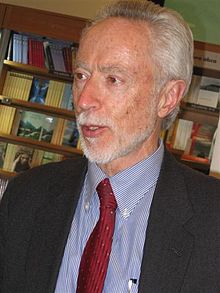
                                                  J. M. Coetzee in Warsaw (2006)
John Maxwell Coetzee  (born 9 February 1940) is a South African-born novelist, essayist, linguist, translator and recipient of the 2003 Nobel Prize in Literature. He has also won the Booker Prize (twice), the CNA price (thrice), the Jerusalem Prize, the Prix Femina étranger, The Irish Times International Fiction Prize, and holds a number of other awards and honorary doctorates.[2][3]
He is one of the most critically acclaimed and decorated authors in the English language.[2][4][5][6]
Coetzee relocated to Australia in 2002, and currently lives in Adelaide.[7] He became an Australian citizen in 2006.
                                              Image result for waiting for the barbarians central themes
 Plot Summary

The story is narrated in the first person by the unnamed magistrate of a small colonial town that exists as the territorial frontier of "the Empire". The Magistrate's rather peaceful existence comes to an end with the Empire's declaration of a state of emergency and with the deployment of the Third Bureau—special forces of the Empire—due to rumours that the area's indigenous people, called "barbarians" by the colonists, might be preparing to attack the town. Consequently, the Third Bureau conducts an expedition into the land beyond the frontier. Led by a sinister Colonel Joll, the Third Bureau captures a number of barbarians, brings them back to town, tortures them, kills some of them, and leaves for the capital in order to prepare a larger campaign.
In the meantime, the Magistrate begins to question the legitimacy of imperialism and personally nurses a barbarian girl who was left crippled and partly blinded by the Third Bureau's torturers. The Magistrate has an intimate yet uncertain relationship with the girl. Eventually, he decides to take her back to her people. After a life-threatening trip through the barren land, during which they have sex, he succeeds in returning her—finally asking, to no avail, if she will stay with him—and returns to his own town. The Third Bureau soldiers have reappeared there and now arrest the Magistrate for having deserted his post and consorting with "the enemy". Without much possibility of a trial during such emergency circumstances, the Magistrate remains in a locked cellar for an indefinite period, experiencing for the first time a near-complete lack of basic freedoms. He finally acquires a key that allows him to leave the makeshift jail, but finds that he has no place to escape to and only spends his time outside the jail scavenging for scraps of food.
Later, Colonel Joll triumphantly returns from the wilderness with several barbarian captives and makes a public spectacle of their torture. Although the crowd is encouraged to participate in their beatings, the Magistrate bursts onto the scene to stop it, but is subdued. Seizing the Magistrate, a group of soldiers hangs him up by his arms, deepening his understanding of imperialistic violence by a personal experience of torture. With the Magistrate's spirit clearly crushed, the soldiers mockingly let him roam freely through the town, knowing he has nowhere to go and no longer poses a threat to their mission. The soldiers, however, begin to flee the town as winter approaches and their campaign against the barbarians collapses. The Magistrate tries to confront Joll on his final return from the wild, but the colonel refuses to speak to him, hastily abandoning the town with the last of the soldiers. The predominant belief in the town is that the barbarians intend to invade soon, and although the soldiers and many civilians have now departed, the Magistrate helps encourage the remaining townspeople to continue their lives and to prepare for the winter. There is no sign of the barbarians by the time the season's first snow falls on the town.

Central Theme

Waiting for the Barbarians Themes
  • Imperialism. One of the most prominent themes in Waiting for the Barbarians is imperialism. ...
  • Colonialism. Distinct from imperialism, the theme of colonialism as a physical, territorial project with far-reaching implications plays out in Waiting for the Barbarians. ...
  • Male sexuality. ...
  • Power. ...
  • Interrogation. ...
  • Rape. ...
  • Fear of the other.


The most striking unique feature of this novel


Detachment is one of the most striking features about J.M. Coetzee's Waiting for the Barbarians (WFTB). The frontier fort, in which the novel is set, is geographically placed on the fringe of a nameless Empire in an unspecified era, thus detached geographically, culturally and historically.


Characters

The magistrate

The magistrate transforms from an old man living a peaceful life to an outspoken opponent of the Empire that employs him. His transition highlights how individual members of a majority population passively benefit from the violent colonization or oppression of minority populations. They benefit even if they haven't partaken in the oppression themselves. The magistrate's character indicates how there are no innocent parties in government oppression. At the beginning of the novel, the magistrate works for the Empire, enforcing laws without question. When Colonel Joll arrives and begins torturing prisoners, the magistrate feels uncomfortable with the injustice but allows it for the sake of hospitality to Joll. The magistrate houses one of Joll's torture victims, a nomad girl, whom he massages although he gets no sexual pleasure out of the act. He eventually decides to return the girl to her family. When he arrives back at town, the Empire has issued a warrant for the magistrate's arrest, alleging his collusion with the enemy. The magistrate is imprisoned, beaten, and tortured before the army eventually abandons the town. The magistrate resumes his former position but as a changed man.

Colonel Joll

Colonel Joll represents the active violence of colonization. Dressed in black with dark sunglasses and a black carriage, Joll epitomizes evil. He seeks out prisoners to torture even if they don't have information to offer. "Prisoners are prisoners," he says. It's unclear whether Joll's bloodlust is a result of wanting to showcase the Empire's power or simply personal sadism. At the end of the novel, Joll's sunglasses have been removed, symbolizing that he sees the error of his ways. Rather than facing the violence he has created, Joll runs away in fear for his life.

The girl

The girl represents the subjects of colonization and oppression. The girl comes from a nomadic fishing tribe and is one of Joll's first torture victims. The torture leaves her crippled and blind, although she retains partial peripheral vision, representing how she will never see the world in the same way. She tries to make a living as a prostitute and beggar before the magistrate takes her in. The girl shows little emotion during her relationship with the magistrate except frustration that he won't treat her the same way he treats other women. The scars on her body represent the effects of colonization. Her broken ankles, for example, represent how a colonized society cannot move forward on its own.

Mandel

Warrant Officer Mandel is sent by the Empire to take over the magistrate's post when the magistrate is accused of treasonous plotting with the barbarians. Through the magistrate's narration, Mandel is described as handsome, vain, and self-conscious. He seems intent on proving to the magistrate that he belongs in his post, despite his position of power. He treats the magistrate and townsfolk with complete disrespect and allows his men to run wild on the streets, stealing from shops and abusing their charges. Like Joll, Mandel takes personal delight in the magistrate's humiliation and physical torture. He arranges for the magistrate to be dressed in women's underwear and hung from a tree. He soaks up the admiration of the townsfolk, however falsely it may be given, and enjoys their feasts, but when the time comes to actually protect the people from the barbarians, Mandel abandons them.

Thinking activity on The Da Vinci Code


Thinking activity on The Da Vincy Code 


                                     Image result for dane brown


  • Brown states on his website that his books are not anti-Christian, though he is on a 'constant spiritual journey' himself, and says that his book The Da Vinci Code is simply "an entertaining story that promotes spiritual discussion and debate" and suggests that the book may be used "as a positive catalyst for introspection and exploration of our faith."  
  • Ans. I disagree to the point of Dan Brown because the novel has anti religion elements like Mary Magdalene. As we all know that Jesus was unmarried and Magdalene is just fictional character why writers like Brown explore his own thought. It is all about nonsense kind of thing. The code and painting is only a piece of art it has nothing like any religious code and symbols. If people are saying that Council of Nicea created whole the thing about Jesus then somewhat they are right because Jesus was only a messenger of God not God himself and Jesus neither married nor had any kind of relation and children. So, here Writer shows Sophie the character in the book as a Magdalene descendant is not true. So, according to me it is anti Christian novel and writers keep on writing about anti religions for limelight and popularity.


    •  “Although it is obvious that much of what Brown presented in his novel as absolutely true and accurate is neither of those, some of that material is of course essential to the intrigue, and screenwriter Akiva Goldsman has retained the novel's core, the Grail-related material: the sacred feminine, Mary Magdalene's marriage, the Priory of Sion, certain aspects of Leonardo's art, and so on[1].” How far do you agree with this observation of Norris J. Lacy?

    • Ans. I agree to the observation of Norris J. Lacy that many things in the novel is not accurate and fact like there is no any autheniticity and reliable proofs about the existence of priory of sion and also novel has not show real opes die. Furthermore, there is no such proof about marry Magdalene and so on. And absolutely the screen writer beautiful presented the core of novel to use appropriate materials about secrets and sybmols. And also choose very wonderful places and scenes. I can say that movie is worth watching than books because movie use very wonderful materials.


      • (If)You have studied ‘Genesis’ (The Bible), ‘The Paradise Lost’ (John Milton) and ‘The Da Vinci Code’ (Dan Brown). Which of the narrative/s seem/s to be truthful? Whose narrative is convincing to the contemporary young mind?
      Ans. According to me the narrative of 'The Paradis lost' is better narrative than ''The Da Vinci Code' because Milton gave the voice to minor characters like Eve and Satan rather than God and Adam. So, somehow it is convince modern mind because they find the discrimination in the Bible. Whereas  'The Da vinci code' narrative look very far away from truth.


      • What harm has been done to humanity by the biblical narration or that of Milton’s in The Paradise Lose? What sort of damage does narrative like ‘The Vinci Code’ do to humanity?
      Ans. By this kind of narration, people's faith in God can be lost and there is nothing like morality without God. Religion gives us a right path and teach moral lesson. So, if you narrate this kind of story then as Eliot said about spiritual degradation and sexual perversion make waste land. Some People are arguing that people keep on fighting with each other in the name of religion but it is not true because religion is innocent, problem is in humanbieng. These all hatred created by people for their benefit like relegious master and saint for power and wealth. For instance, if we see three major religions: Islam, Christianity and Judaism, they all have one root but different master and saint Divergence people in different religion because of power position and jealous. So, throughout the ages this kind of books and people damage the faith on divine thing.

      • What difference do you see in the portrayal of 'Ophelia' (Kate Winslet) in Kenneth Branagh's Hamlet, 'Elizabeth' (Helena Bonham Carter) in Kenneth Branagh's Mary Shelley's Frankenstein or 'Hester Prynne' (Demi Moore) in Roland Joffé's The Scarlet Letter' or David Yates's 'Harmione Granger' (Emma Watson) in last four Harry Potter films - and 'Sophie Neuve' (Audrey Tautau) in Ron Howard's The Da Vinci Code? How would justify your answer?
      Ans. There is not much difference among all the female characters. All the characters have different role and different context. But if we see from the movie's perspective then we can realize that director portrayed all the female characters as brain with beauty but not active like male characters. In every works female characters as intellectual as male characters but they unable to show their talent hence directors show just as beautiful actresess who support male protagonist.

      • Have you come across any similar book/movie, which tries to deconstruct accepted notions about Hindu religion or culture and by dismantling it, attempts to reconstruct another possible interpretation of truth?
      Ans. Yes, there are many books and movies which tried to deconstruct accepted notion. For instance, 'The Satanic Verses' by Slaman Rushdie which deconstruct and blasphemy of Islam. Salman Rushdie wrote about three goddesses before Muhammad and said that prophet Muhammad spoke satanic verses. But that is not fact according to authentic history, Quran and Hadith.

      • Do novel / film lead us into critical (deconstructive) thinking about your religion? Can we think of such conspiracy theory about Hindu religious symbols / myths?
      Ans. Yes, there are many things and myths in Islam that I do not know how it happened but I will ask this all things with authentic and reliable master or books about Prophet Muhammad's journey to the sky, about prophet Isa(Jesus) that how Mariam(Marry) gave birth to Jesus though she was virgin and pure woman.


      • When we do traditional reading of the novel ‘The Da Vinci Code’, Robert Langdon, Professor of Religious Symbology, Harvard University emerges as protagonist and Sir Leigh Teabing, a British Historian as antagonist. Who will claim the position of protagonist if we do atheist reading of the novel?
      Ans. From the point of view of mine, if I do atheist reading of the novel the protagonist will be professor Robert Langdon because he himself said that I can not understand the God. Throughout the novel/movie I coudn't find Langdon had any kind of faith in God, he just solves and decoded the symbols and puzzles and I don't find that atheist attacked on religion like Teabibg. Whereas Sir Leigh Teabing seems anti christian in the novel but why? According to me he is not atheist. There are many reason behind his hatred against Christianity. Jaques Saunier and Teabing were known to each other and I think Teabing want to discover Holy Grail. If he is atheist then why very curious about Holy Grail? Jealous or avenge to Priori of sion is may be a reason behind that. So, I think Teabing not atheist but a religious man who want to reveals the secrets because of revenge.


      • Explain Ann Gray’s three propositions on ‘knowability’ with illustrations from the novel ‘The Da Vinci Code’.
      • a.       1) Identifying what is knowable 
        b.      2) identifying and acknowledging the relationship of the knower and the known
        c.      3) What is the procedure for ‘knowing’?

      1. The very first step is to identify that what is knowable. In the novel, things begins from the symbol of pentacle and identifying the codes of Da Vinci who is famous for keeping secrets in his work of art. Each and every symbols, paintings, object which follows Vinci's design is making some secrets which need to be revealed by the protagonist.


      2. The second step in the process is to identify the relationship between the knower and the known. Means who is the knower of secrets, who knows the truth behind the codes and how it get connected with the known things of Vinci. In a way Leigh Teabing knows much about the codes and knows how to decodes things. But his relationship with the secret object known in the end. Langdon at the end decodes the cryptex but keep it secret in front of Teabing. Sophie knows everything about her so called grandfather and how he used to keep secrets and make puzzles, but each things connected in the end of the novel.


      3. The last thing is to understand the process of 'knowing'. That is how Sophie and Langdon reached to the final truths by decoding each and every object in between. From the symbol of pentacle on the chest of Sauniere till the end to decoding the truth behind the Holy Grail which is the sarcophagus of Mary Magdalene which provides the DNA for living descendent.

      Workshop task on Cultural Studies By Kalyani Vallath

      Workshop task on Cultural Studies By Kalyani Vallat


      About Kalyani Vallath

                                     
                                           Image result for kalyani vallath

                      Kalyani Vallath is an educational entrepreneur, editor and teacher of English literature from India. Vallath compiled A Contemporary Encyclopedia of British Literature and runs Total English Solutions in Thiruvananthapuram to help teach English to people living in rural parts of India.

      What is your understanding about the concept of Cultural Studies?

      Cultural studies is a field of theoretically, politically, and empirically engaged cultural analysis that concentrates upon the political dynamics of contemporary culture, its historical foundations, defining traits, conflicts, and contingencies.


      Here I write some of the concept of cultural studies but it is not enough because cultural studies called slade of bowl.
      • Interdisciplinary study
      • Relates to the large society
      • Political dynamic of mass media and everyday cultural practice
      •  Cultural transforms individual experience, social realities and power relations 
      How many examples from the sessions were so catchy that you will never forget it? Write about it.

      Encoding and decoding culture explain with example of advertisement of Trakam power it most popular in Kerala.
      Materialism - it is artifact everything for example mineral water in the bottle.
      This kind Ma'am explain with various kind of examples.


      At the end of this session we kept a group photo with Ma'am


      Sunday, January 19, 2020

      Thinking activity on The White Tiger

      Thinking activity on The White Tiger

      Task given by Sir,

      1) How far do you agree with the India represented in the novel The White Tiger?

      Ans.  Somewhat I agree with the representation of India in the novel because somehow Adiga presented reality of India like corruption, poverty, cheats and illiteracy. Although, when novel was written that time India also has bright side and development but here Adiga shows us the dark side of India. These kind of thing somehow we can see in all the countries of the world. So, Adiga presented the reality of India and we see this kind of India in the present day also.


      2) Do you believe  that Balram's story is the archetype of all stories of ''Rags to riches?

      Ans. We an see that the stories which portrays poor as central character at the end of the  story the poor becomes rich. We can see many people who are same as Balaram. Same like who belongs to poor and wide family, who did not complete their studies, who goes to work from early childhood, and who has bearing insults from those who are rich. These types of stories shows the struggle of poor to achieve their dream and for that becoming rich. The ways of reaching to the destination of wealth might differs of each stories but the suffering always remain same. So, this way we can say that Balram's story is archetype of all stories of 'Raga to Riches'.


      3. " Language bears within itself the necessity of its own critique, reconstructive criticism aims to show that any text inevitably undermines its own claims to have a determinate meaning, and licences the reader to produce his own meaning out of it by an activity of semantic 'free play' (Derrida, 1978, in Lodge, 1988,p. 108) Is it possible to do deconstruction reading of The White Tiger? How?

      Yes, it is possible to deconstruct "The white Tiger". We can deconstruct it with the help of Derrida's concept of free play of meanings. To break the language we need to find the loose stone of it. The loose stone of "The White Tiger" is that Balram himself says that he is "Half-backed. This word breaks all the philosophy and all the ideals which Balram is presenting by giving his own example. Because he is not fully educated. He understand things with his limited power of analysis. He appropriate the deep philosophies with his shallow ideas and thinking. For example, he compares his idea of killing his master and get freedom with the enlightenment of Buddha. This proves his shallow knowledge about Buddha and his idea of enlightenment. So, this way we can deconstruct "The White Tiger"


      Similarities between "The White Tiger" and "Slumdog Millionaire": 


      1. Narrative structure : wanted poster / KBC show
      The white tiger is an epistolary novel , dark comedy and satire. Balram Halwai is protagonist in the novel. Flashback technique used here. Balram writes letters to Wen Jiabao , the premier of China.
      In film ' Slumdog millionaire ' protagonist Jmal mlik , whose story represented by flashback technique. In the film setting is KBC show as medium of  narration. Balram Halwai and Jmal mlik both achieve their goals by their own style. By being honest , corrupt , moral or immoral or by desire. Both were also presented as  " Chai wala ". Jmal mlik became famous by show and Balram by Wanted poster. Both have money idea in mind and they make it also. In both poverty , corruption , family , struggle all are presented.  Thus narration of novel and film are much similar.

      2. Indianness
      In both narration there is a satire on India , that no basic necessities even fulfilled like , water , electricity , public transportation , discipline or punctuality. Cricket , voting patterns , intuition all reflects Indianness.

      Family structure : In both film and novel narration of family life. Balram ' s father and grandmother , cousins all binds him. He have to sacrifice his study for family support. But he breaks the tradition and get freedom by  loss of family. Jmal ' s brother slim also departed from him have choose bad  way to survive.

      Railway station : train and station narration in both reflects indianness. Balram ' s wanted poster and run away after crime all at the station. Jmal 's quest , love and ending all at the station . Thus station reflects indianness.

      Two brothers : two brothers lost and found is archytype also reflects Indianness in both narration. Slim ' s departure and meeting shows that thing.

      Police system : In The White Tiger Balram bribes police and start New business . In Slumdog millionaire also police is corrupted. Thus it reflects Indianness.

      Education : Balram and Jmal both were uneducated but still have intelligence and talent to understand the world. They have enough knowledge how  to survive in world.

       3. List  of the questions asked in the ' Slumdog millionaire'.


       1. Who was the star in the 1973 hit film "Zanzeer"
      ans. Amitabh Bacchan

        2. A picture of three lions is seen in the national emblem of India. What is written underneath it?
      Ans.  The Truth alone triumphs
          
      3. In depiction of God Rama, he is famously holding what in his right hand?
       Ans. A bow and arrow
          

      4. The song " Darshan Do Ghanshyam" was written by which famous Indian poet?
        Ans. Surdas
          

      5. On the American One Hundred Dollar Bill, there is portrait of which American Statesman?
       Ans. Benjamin Franklin
          

      6. Who invented the revolver?
      Ans.  Samuel Colt
          
      7. Cambridge Circus is in which UK City?
       Ans . London

      8. Which cricketer has scored the most first class centuries in history?
       Ans.  Jack Hobbs

      9. In Alexander Dumas' book, "The Three Musketeers", two of the musketeers are called Athos and Porthos. What was the name of the third Musketeer?
        Ans .Aramis
         

      4. Deconstruction of film from post colonial perspective.


      In narration of  the novel we find they treated Indian as very inferior people comparing to them. By showing slim as bad boy , and as chitter with them , then  good reaction of  Americans towards them. That shows their mentality towards India. They visited Indian place it also part of it. By portraying Indian as poor and corrupted they make themselves superior.


      5. Compare with Texture and treatment of subject content in film and novel.


      Texture in both narration is about India as corrupt and poor country. Villages , landlords , education all represents the darkness of  India. Slum area and poverty is also reflects it. Rich heritage and spirituality , family / orphans all are texture of both . Both have own ways to achieve goals by good or bad things . So treatment is light , humorous and sometimes comic and dark.

      Major themes of Things Fall Apart and character of Okonkow

      Name:- Hetal Dabhi Sem:- 4 Paper:-14 (The African Literature) Assignment Character of Okonkow The protagonist of Thi...